Every search turns up good people who aren't right for that role. Without a record of what they want and when they'll be ready, they're forgotten by the next search, and you start sourcing from scratch.
Anyone in identifyd can be a candidate, with a profile of their temperature (Active, Open, Passive, Not now or Placed), what they want, your account's DIG tags (discipline, industry and geography) and whether they're OK to market. When a search opens, Matches ranks the people already in identifyd for it, and hands-off rules keep you from recruiting out of your clients.
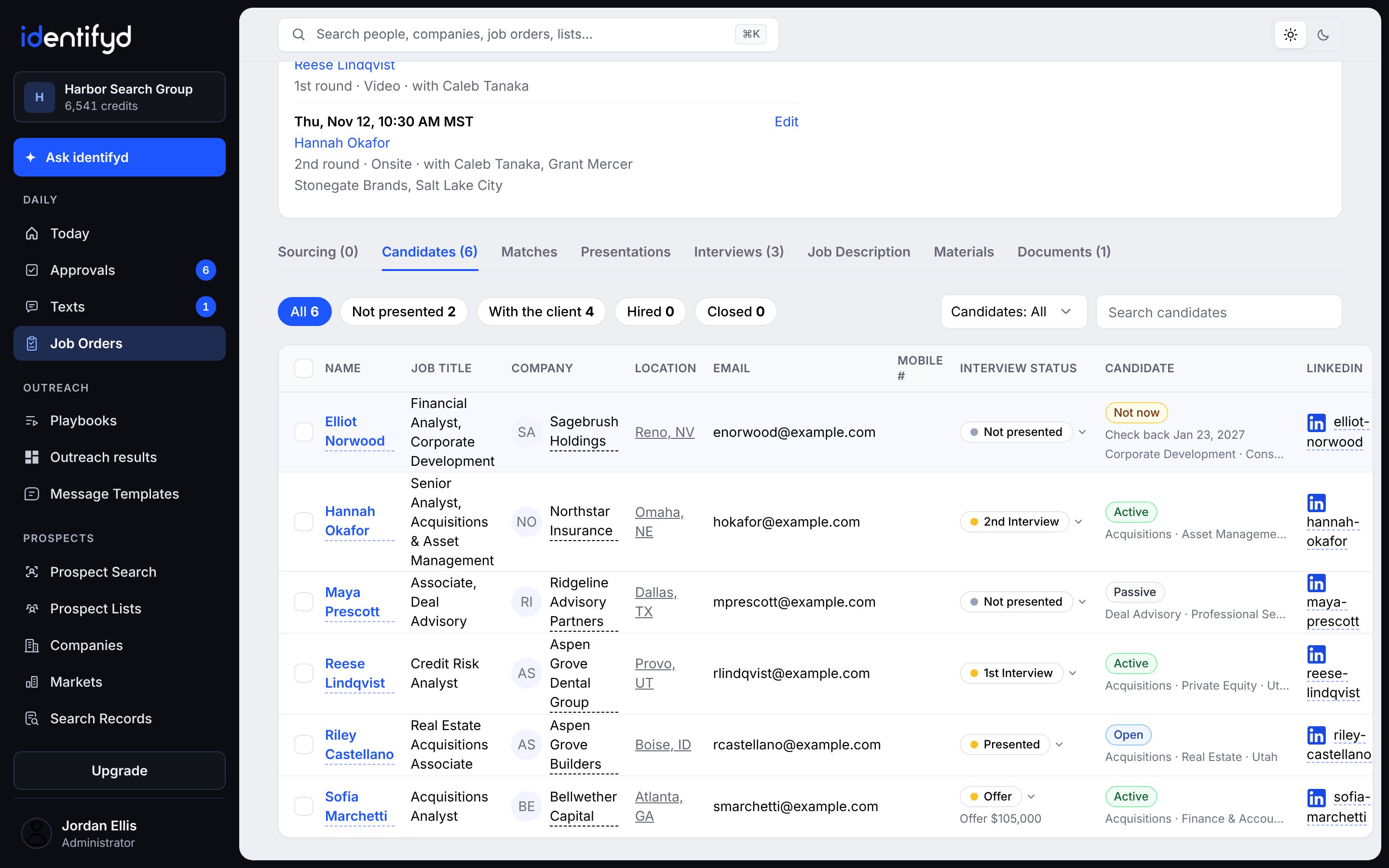
Discipline, industry and geography: the lists a 360 desk uses to organize its candidates. An admin keeps your account's own lists, and identifyd suggests tags from a candidate's title, industry and state.
From a job order, Matches starts from the job's title and location and finds people already on your lists, your candidates and people with a parsed resume. Claude can rank up to 50 of them, each with a one-line reason. Nothing is sent and no credits are spent.
You don't recruit from a company while it has an open job order, for a year after you place someone there by default, while you've marked it, or while the investor that owns it is. Marketing a candidate to a hands-off company is still fine.
Each profile records whether the candidate is OK to market to companies that haven't posted a role, and the companies not to approach for them, their current employer always included.
