Recruiting is relationships with companies as much as with people. When contacts live in one list and job orders in another, it's hard to see where you stand with a firm, and easy to recruit out of a client you've promised to leave alone.
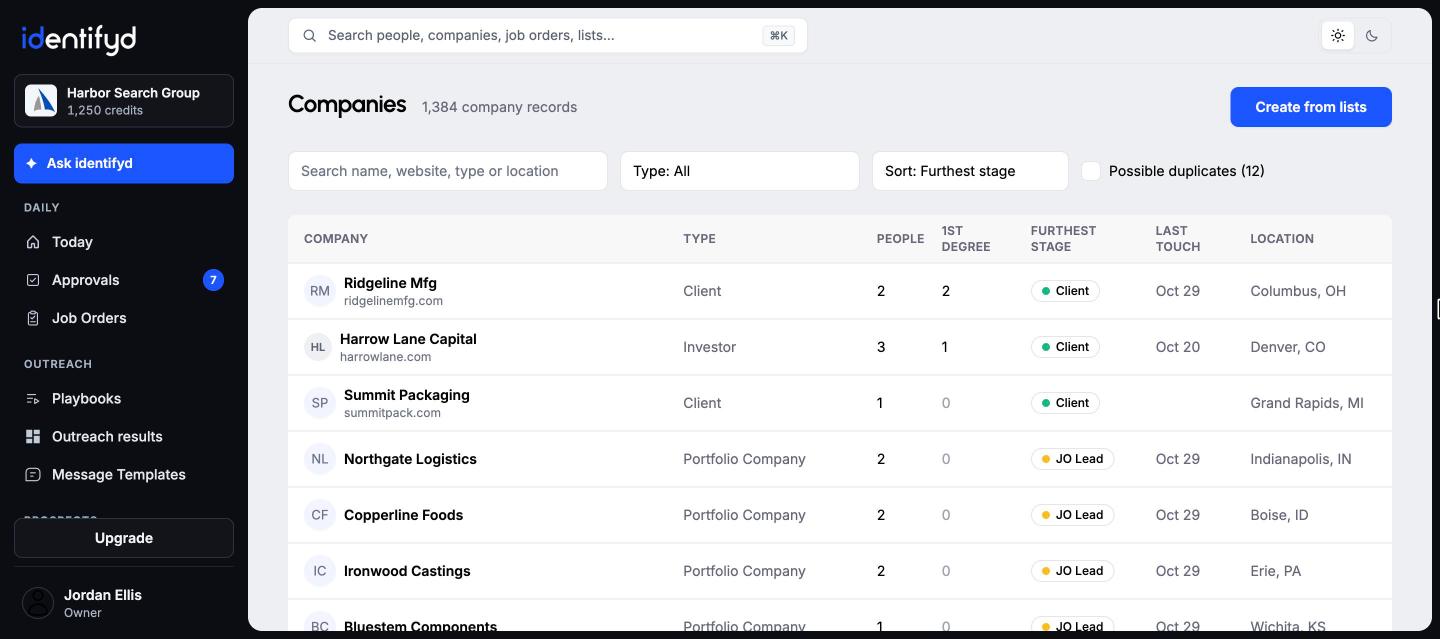
identifyd's company records group everyone you know at a firm, with its type, your furthest stage there, your 1st-degree connections and the last touch. Investors are linked to the companies they own, notes stay with the company, and hands-off rules keep you from recruiting out of the firms you work for.
You don't recruit from a company while it has an open job order with you, for a window after you place someone there (a year by default), while you've marked it hands-off, or while the investor that owns it is. identifyd warns you before you add someone from a hands-off company to a search and leaves them out of candidate matches. Marketing a candidate to a hands-off company is still fine.
Create them from your prospect lists in one step, add one by hand, or have Claude create them through the Claude connector. identifyd flags possible duplicates for you to merge.
Yes. Mark a company as owned by an investor, such as a private equity firm, and the two are linked. When the investor is hands-off, so are the companies it owns.
